


Let's get one thing straight: what does a flexible schedule really mean in today's agency world? It’s not about letting your team work from home a couple of days a week. It's about giving them real control over when and where they do their best work.
Think of it as a range of freedom. On one end, you have slightly adjusted office hours. On the other, you have a fully asynchronous setup where results are the only thing that matters.
What a flexible schedule actually means today

For agency leaders and project managers, this shift changes how we look at productivity. It’s less about clock-watching and more about measuring outcomes. A flexible schedule has grown from a simple perk into a core business strategy.
This isn't just a top-down decision; it’s driven by huge employee demand. A Robert Half survey found that 55% of professionals now prefer a hybrid schedule. In contrast, only 16% want to be in the office full-time.
For agencies fighting for top talent, that means flexibility is no longer optional. It's essential.
The shift from presence to performance
At its core, this movement is about dropping "presenteeism"—the old idea that being physically present equals productivity. Instead, the focus is squarely on performance and results. A flexible schedule is a trust agreement that empowers employees to manage their own time and deliver great work without a manager looking over their shoulder.
Of course, this needs a new management mindset, one built on clear goals and open, frequent communication. When you get it right, the benefits are huge for everyone:
- Access to a wider talent pool by hiring the best people, not just the closest.
- Increased employee morale and job satisfaction, which leads directly to better retention.
- Greater freedom for your team, letting them work when they're at their sharpest.
- Potential for lower overhead costs from a smaller office footprint.
Truly understanding the future of hybrid work is the way to make this work. For managers, the real challenge is building a system that grants freedom while making sure everyone stays accountable. This guide will walk you through exactly how to define, implement, and measure a flexible schedule that helps your agency grow.
The most common types of flexible schedules explained

Knowing what a flexible schedule means is one thing, but putting it into practice means picking the right model for your agency. The truth is, not all flexible arrangements are the same. Let's break down the most common types.
Each one offers a different level of control and freedom. The trick is to find the sweet spot that works for both your team’s well-being and your clients' demands.
Flextime
Flextime is one of the most popular and simple ways to offer flexibility. It lets employees pick their own start and end times, as long as they put in a full day’s work. This gives people the room to handle personal appointments, family needs, or just work when they’re most productive.
Think of it like a coffee shop that needs to be open for 8 hours a day. The owner doesn't really mind if the barista shows up at 6 a.m. to start prepping or at 8 a.m. for the morning rush, just as long as the full shift gets covered. This approach is perfect for roles that don’t require constant, real-time team collaboration.
Core hours
A core hours schedule is a smart twist on flextime. With this model, you set specific times when everyone must be online and available—say, from 10 a.m. to 3 p.m. Outside of those core hours, employees are free to structure the rest of their workday however they like.
This model is like a restaurant with an "open for business" sign. Everyone knows when customers will be walking in, but the staff can handle their prep and cleanup on their own time before and after the rush.
It’s a great middle ground that supports both collaborative work and individual freedom, which is why it’s a big hit with creative and client-facing agencies.
Compressed workweek
With a compressed workweek, your team works the standard number of weekly hours, just packed into fewer days. The classic example is the "4/10" schedule, where people work four 10-hour days to get a three-day weekend. Some companies even get creative with things like a nine-day, 80-hour fortnight.
This can be a huge win for morale and work-life balance. Just be aware that longer days can lead to burnout if you're not careful, so this model needs thoughtful planning. If you want to see how these schedules can be structured, check out our guide with an example work schedule to get some ideas.
Hybrid models
A hybrid model is less about when you work and more about where you work. It’s a blend of in-office and remote work, and there are a few common ways to set it up:
- Office-First: Employees are in the office most of the week but have the option to work from home on certain days.
- Remote-First: The team primarily works from wherever they want but comes into the office for key events like strategy sessions or team-building activities.
- Split-Week: The week is neatly divided, with specific days for being in the office (e.g., Tuesday-Thursday) and remote work (e.g., Monday and Friday).
Hybrid models have quickly become a new standard, with many companies finding a rhythm that gives their teams both the structure of office life and the freedom of remote work.
The business case for flexibility in mid-sized agencies
Alright, we’ve walked through the different flexible work models. Now let's get to the point: Why should a mid-sized agency, say 50-200 employees, really care about any of this? A well-run flexible schedule isn't just a "nice-to-have" perk anymore. It’s a serious business strategy with a real, measurable impact on your bottom line.
For any agency, what are the two biggest expenses? Talent and office space. A smart flexible work policy tackles both of these head-on, turning potential drains into strategic advantages.
Attracting and keeping top talent
In today's market, you're not just up against other agencies for the best people. You're competing with every company that gets work-life balance right. When a brilliant designer, a sharp developer, or a seasoned account manager has a few offers on the table, the one with more freedom often wins. Suddenly, your talent pool isn't limited to a 50-mile radius—it's global.
But here’s the real secret: the biggest win isn’t just landing new talent, it’s keeping the incredible people you already have. When your team feels trusted and in control of their work, their loyalty and engagement go way up. This massively cuts down on the costs of recruiting, hiring, and training replacements.
Reducing operational overhead
For an agency your size, that monthly rent check is a huge item on the budget. Shifting to a hybrid or remote-first model can slash those overhead costs. Even shrinking your office footprint by a little can translate into big savings on rent, utilities, and all those other office-related expenses.
But this is more than just trimming costs. It's about putting that money to work. The cash you save on a half-empty office can be reinvested directly into growing your agency:
- Better salaries and benefits to stay ahead of the competition.
- New technology that makes your team more efficient.
- Professional development to help your people grow their skills.
- A bigger marketing budget to bring in more clients.
Improving your bottom line through well-being
When you connect all the dots, the business case becomes very clear. A flexible work policy is a direct investment in your team, and that investment pays dividends through a healthier bottom line.
Employees who feel empowered and aren't burned out are more productive, more innovative, and more committed to the agency's success. They do better work for your clients because they aren't stressed about a rigid 9-to-5 schedule. By linking your team's well-being to your agency's financial health, you stop seeing flexibility as a cost and start seeing it for what it is: a way to drive profit.
How to handle the challenges of a flexible work model
Offering flexibility isn't a magic fix for agency life; it comes with its own set of problems. While the benefits are clear, ignoring the potential downsides is a sure path to team friction, missed deadlines, and a lot of headaches.
So, let's get real about the common challenges and, more importantly, how to solve them. Simply announcing a new policy isn't enough. You have to fundamentally rethink how you manage communication, fairness, and your team's well-being.
Keeping your team connected and aligned
When your team isn't sharing the same physical space, it's easy for communication to break down. Those spontaneous brainstorming sessions by the coffee machine? Gone. A sense of isolation can quickly creep in for remote people.
Before you know it, you have a disjointed team where no one is quite on the same page.
The solution is to be incredibly intentional about communication. You can’t just hope it happens.
- Establish Clear Communication Channels: Designate specific tools for specific jobs. Maybe Slack is for quick questions, email is for formal client updates, and a project management tool like Asana or Trello is for all task-related discussion.
- Schedule Regular, Meaningful Check-ins: These are your non-negotiables. Think daily stand-ups (even virtual ones), weekly team huddles, and dedicated one-on-one sessions. These meetings are the glue that keeps everyone aligned and feeling like part of a team.
To truly make flexibility work, understanding and using actionable remote team management tips is essential for keeping productivity and team spirit high.
Preventing burnout and promoting fairness
Here's one of the biggest ironies of flexible work: it can actually cause burnout. Without the clear start and end times of a 9-to-5 office day, the lines between work and home life get very blurry. Employees can feel pressured to be "always on," which is a fast track to exhaustion.
A flexible schedule should offer freedom, not create a 24/7 digital leash. The goal is control over hours worked, not an expectation to work all hours.
To fight this, you have to set firm boundaries. Encourage your team to block out personal time on their calendars—and then, importantly, respect those blocks. Managers need to lead by example here, which means no sending emails or messages late at night or on weekends.
Fairness is the other big problem. How do you make sure work is distributed evenly when you can't physically see who’s swamped? Proximity bias—the natural tendency to favor employees you see in person—is a very real risk.
The key is to rely on data, not just gut feelings. Use your project management tools to get a clear view of workloads. Have open and honest conversations about capacity during your team check-ins. This ensures tasks are assigned based on actual availability and expertise, not just on who happens to be most visible.
How to measure productivity with a flexible team
Let's be honest. The biggest fear managers have about flexible work is a loss of control. If you can’t see your team at their desks, how do you know work is getting done? The answer is a basic shift in perspective: stop managing by presence and start managing by performance. It’s all about measuring outcomes, not watching the clock.
The secret to doing this well is probably right in front of you: your team's calendar. Tools like Google Calendar and Outlook are more than just scheduling aids. They're a living record of work. When you use automated time capture, every meeting, task, and focused work block is logged and categorized—all without anyone filling out a manual timesheet.
From calendar events to business insights
Think of each calendar entry as a single piece of a much larger puzzle. That internal design review, the quick client call, a two-hour block of "heads-down" work—each one tells a part of the story. When you capture this data automatically, you start connecting those activities to specific projects, clients, or internal initiatives.
Suddenly, you have a data-driven way to see exactly where your team's time and energy are really going. You can finally get clear, objective answers to important business questions, like:
- How much time are we actually spending on non-billable client communications?
- Is Project X truly profitable when you factor in all the hours invested?
- Which team members have the capacity to take on that new project?
This isn't about micromanagement. It's about clarity. The process relies on a simple, repeatable system: connect with clear communication, distribute work fairly, and track progress with real data.
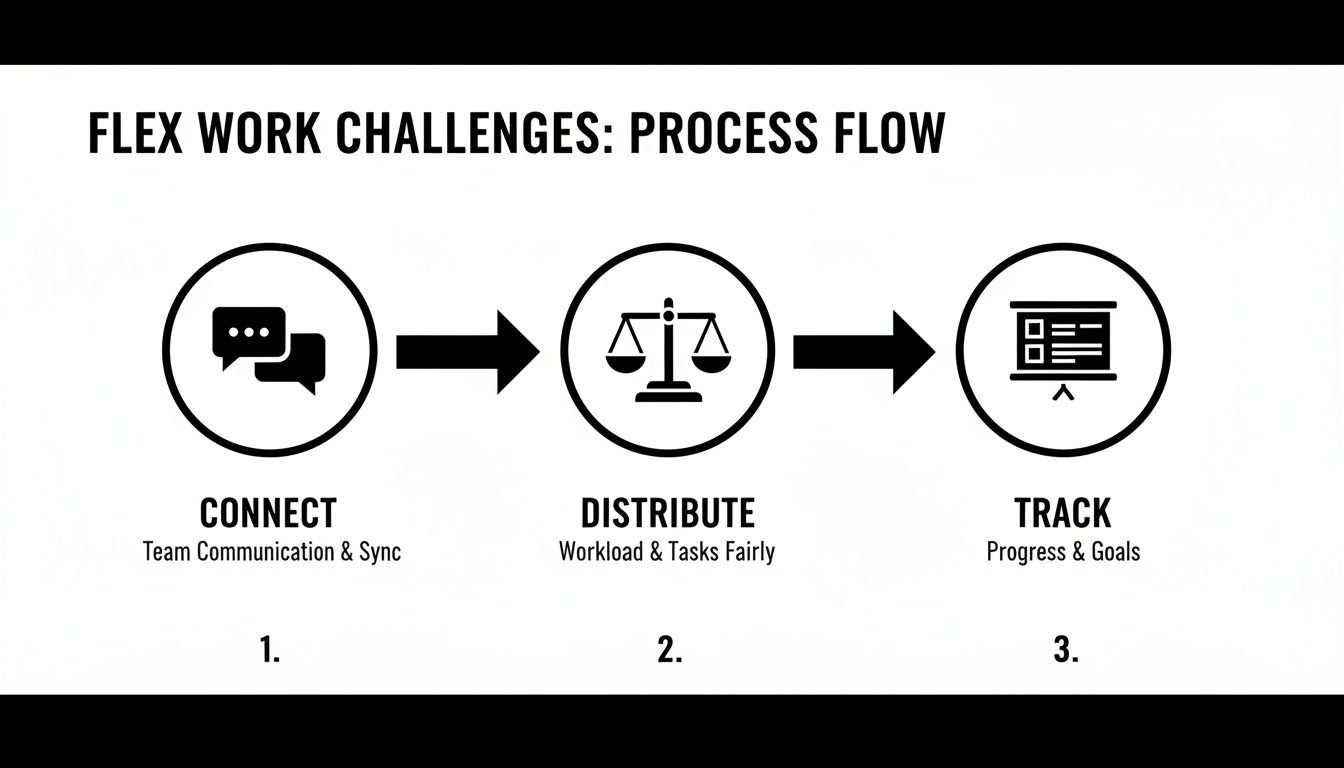
As you can see, successful flexible work isn't just about trusting people to do their jobs. It's about building a system of transparent communication, balanced workloads, and outcome-based tracking that supports them.
Using data to lead with confidence
This approach transforms productivity from a subjective guess into an objective measurement. Instead of wondering if someone is working, you can see the direct results of their effort reflected in project speed and client satisfaction. For a closer look at how this applies to agency-specific challenges, you can dive deeper into time tracking for agencies and learn how to implement it effectively.
A flexible schedule doesn't mean you lose visibility. It means you shift your focus from tracking presence to tracking progress. With the right tools, you can gain more meaningful insights than ever before.
This method gives you the hard data you need to lead a high-performing flexible team with confidence. You’re able to empower your people with the freedom they want while keeping a clear, real-time view of productivity and profitability.
Of course, it helps when employees are also equipped to manage their own time well. Sharing proven strategies, like these remote work productivity tips, can help everyone maintain peak performance, no matter where they're working.
Putting a successful flexible schedule policy in place
So, you’re ready to create a flexible schedule policy. This isn’t just about writing down a few rules—it's about building a framework based on trust and absolute clarity. A fuzzy, poorly-worded policy will cause more headaches than it solves.
Think of it as the official playbook for how your agency operates. It needs to answer the big questions before your team even thinks to ask them. Get this right, and you'll have productive, well-managed flexibility. Get it wrong, and you risk chaos.
Key components of a strong flexible work policy
Before you announce anything, your written policy needs to be solid. These are the non-negotiables that ensure everyone is on the same page, keeping things fair and aligned across the board. A half-baked policy is worse than no policy at all.
Your document should clearly define:
- Eligibility: Who gets to participate? Is this for everyone, or only for certain departments or seniority levels? Be very clear about the criteria.
- Available Schedule Types: Don't leave things open to interpretation. Clearly list the options, whether it’s flextime, a 4-day workweek, a hybrid model, or something else.
- Communication Expectations: What are the core hours when everyone needs to be online and available? Specify which tools are for what—like Slack for quick chats and email for formal updates.
- Tools and Technology: List the required software and hardware. This means project management platforms, communication apps, and any security measures needed for remote access.
Rolling out your new policy
How you introduce your new policy is just as important as what’s in it. A clumsy rollout can create distrust and resistance right from the start. The goal is to get your team on board and excited, not make them feel like you’re just dropping another set of rules on them.
A policy rollout shouldn't feel like a top-down order. Frame it as a collaborative step forward—a change in how your agency works together to do great work while supporting a healthier work-life balance.
Announce the policy in an all-hands meeting. Walk everyone through the details and create space for a real-time Q&A session. Immediately after, send an email with the full written policy and a link to a shared doc where people can add more questions. This kind of transparency shows you respect your team and gives your new way of working the best possible chance to succeed.
Burning questions about flexible schedules
Thinking about shifting to a more flexible work model? You're not alone. But it’s natural to have questions. Here are the answers to some of the most common ones we hear from agency leaders and their teams.
Isn't a flexible schedule just a fancy term for working from home?
Not quite, though they often go together. Think of it this way: working from home is about where you work, while a flexible schedule is about when you work.
You can have one without the other. For example, an employee might work from the office but follow a 7 a.m. to 3 p.m. schedule to beat traffic and pick up their kids from school. That’s a flexible schedule, just without the remote component.
How do you handle urgent client requests with a flexible team?
This is probably the biggest fear for any client-facing business, and it’s a valid one. The solution is having very clear policies and great communication habits.
Many agencies solve this by using a core hours model. This means everyone agrees to be online and available during a specific window, say from 10 a.m. to 3 p.m. For anything that comes up outside those hours, you can use a rotating "on-call" schedule or have designated points of contact. This ensures someone is always ready to jump on a request, and nothing ever slips through the cracks.
Will my team's productivity drop with a flexible schedule?
It’s a common worry, but the data might surprise you. A well-known Stanford study found that employees with more freedom were more productive than their peers in the office.
The real key is to change how you think about productivity. It’s time to stop measuring hours clocked in and start focusing on what truly matters: hitting deadlines, keeping clients happy, and moving projects forward.
A flexible schedule isn't about working less; it's about working smarter. It empowers people to align their work with their natural energy cycles, which leads to deeper focus and better results.
When you empower your team with trust and the right tools, they’re far more likely to be engaged and produce incredible work, no matter what their schedule looks like. You swap "presenteeism" for genuine performance.
Managing a flexible team requires visibility into performance, not just presence. TimeTackle provides automated insights from your team's calendar data, so you can track utilization, measure project ROI, and lead with confidence. Find out how TimeTackle can help your agency.