

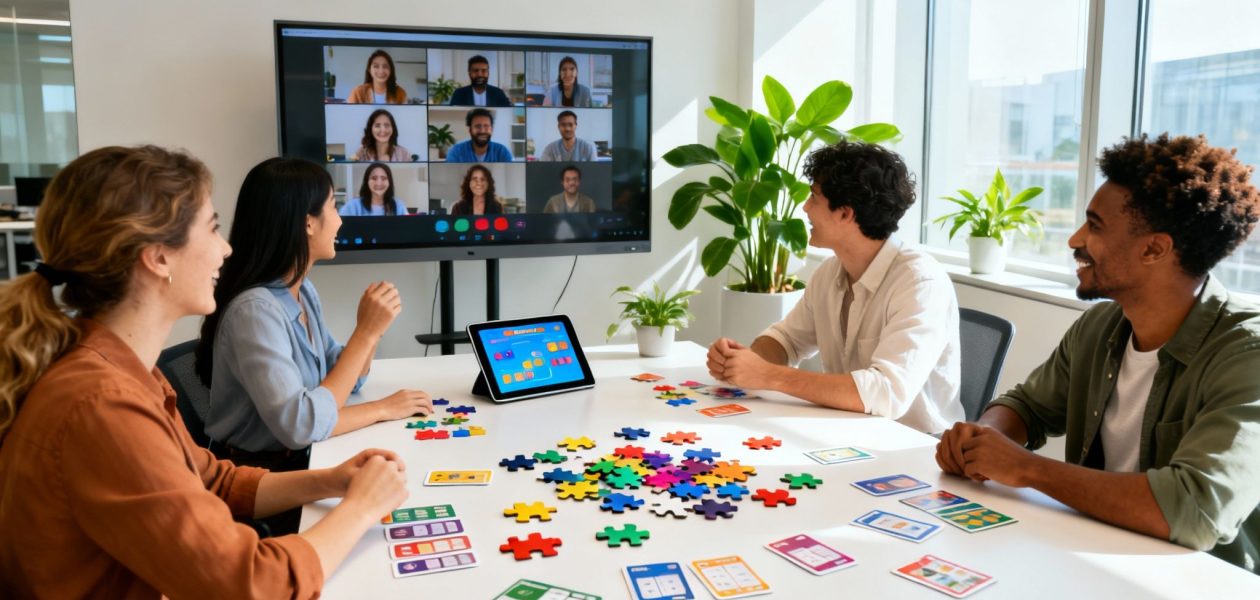
In today's dynamic work environment, fostering a connected, collaborative, and engaged team is non-negotiable. While the term 'team building' often elicits groans, the right activities can be transformative, directly impacting productivity, communication, and morale. This guide moves beyond generic trust falls and awkward icebreakers to present 10 strategic team building games designed for modern workplaces, whether you're in-office, fully remote, or managing a hybrid model.
We'll break down not just what to do, but why each activity works, how to execute it flawlessly, and, most importantly, how to connect the fun back to tangible business outcomes. The focus is on providing actionable blueprints that address specific team goals, from enhancing problem-solving skills with collaborative simulations to improving communication through structured improv workshops.
From high-energy challenges to low-lift virtual mixers, this curated list provides practical steps to strengthen your team's foundation, one game at a time. The goal isn't just to play; it's to build a more resilient, efficient, and cohesive unit ready for any challenge. We will also explore how to measure the impact of these activities, tying them back to utilization and productivity metrics to ensure your investment in team culture delivers measurable returns.
1. Escape Room Challenges
Escape Room Challenges are immersive, time-bound games where a team collaborates to solve a series of puzzles and find clues to "escape" a themed room. This activity is a powerful microcosm of a high-pressure project environment, making it one of the most effective team building games for agencies. It forces participants to communicate clearly, delegate tasks based on strengths, and manage a ticking clock, directly mirroring the urgency of client deadlines and billable hour tracking.
This hands-on approach to problem-solving has been adopted by major firms like Google and McKinsey to train teams in critical thinking under pressure. For teams seeking immersive puzzle-solving, consider engaging in Birmingham Escape Room experiences.
How to Implement Escape Rooms Effectively
To get the most out of an escape room, focus on the pre-game briefing and post-game debrief.
- Set the Stage: Before starting, brief the team on the importance of communication over individual heroics. Frame it as an exercise in collaborative problem-solving, not just a race.
- Choose a Relevant Theme: Select a theme that might loosely connect to your industry, like a "client crisis" or "corporate espionage" scenario, to make the lessons more relatable.
- Debrief and Connect: After the game, facilitate a discussion. Ask questions like, "Who emerged as a leader?" or "Where did our communication break down?" Connect these observations directly to real-world project workflows and challenges. This transforms a fun outing into a tangible learning experience.
- Go Virtual: For remote or hybrid teams, platforms like Puzzle Break offer excellent online versions that maintain the collaborative spirit.
Coordinating schedules for an off-site event like this can be complex. You can learn more about how to streamline group scheduling on timetackle.com to get your team together without the hassle.
2. Team Scavenger Hunts (Physical & Digital Hybrid)
Team Scavenger Hunts are dynamic challenges where teams compete to find items or complete tasks within a set area and timeframe. Modern hybrid versions blend physical exploration with digital submissions like photo proof and online leaderboards. For agencies, these games are fantastic for boosting energy, encouraging workspace exploration, and strengthening cross-departmental relationships in a goal-oriented format. They are one of the most versatile team building games because they can be adapted for any environment.

This method is used by major companies like Salesforce and LinkedIn for everything from new hire onboarding to annual team bonding events. Advertising agencies such as Droga5 even create creative hunts tied to brand storytelling, making the activity both fun and professionally relevant.
How to Implement Scavenger Hunts Effectively
Success lies in thoughtful design and seamless execution, whether in-person or remote.
- Design for Collaboration: Create tasks that require input from different departments. A classic example is, "Get a project profitability tip from someone in Finance." This organically builds network connections.
- Align with Agency Values: Tie tasks to your company's core values or recent client wins. For instance, a task could be to find and photograph an example of "innovation" in the office.
- Leverage Technology: Use an app like GooseChase to streamline submissions, automate scoring, and display a live leaderboard. This adds a competitive edge and simplifies management for organizers.
- Debrief on Team Dynamics: After the hunt, discuss which tasks demanded the most efficient teamwork or creative problem-solving. Connect these insights back to how teams allocate resources and communicate during actual client projects. This transforms the game into a practical lesson on project management.
3. Improv & Comedy Workshops
Improv & Comedy Workshops guide teams through structured exercises that teach active listening, quick thinking, and adaptability. Led by professional instructors, activities like 'Yes, And…' and scene-building break down communication barriers and normalize making mistakes in a supportive environment. This type of training is invaluable for agency teams, as it hones the resilience needed for unpredictable client-facing situations and fosters the creative problem-solving essential for innovative work.

This approach to skill development has been championed by major consulting firms like Deloitte and McKinsey, which integrate improv into leadership and client communication training. For teams looking to sharpen their collaborative instincts, organizations like The Groundlings offer corporate workshops designed to enhance creative teamwork and presentation skills.
How to Implement Improv Workshops Effectively
To maximize the impact of an improv session, the focus should be on creating a safe space for experimentation and drawing clear parallels to the workplace.
- Frame the Session: Introduce the workshop as a 'communication skills' or 'adaptability' session rather than 'comedy' to lower anxiety and encourage participation.
- Start Small: Begin with low-pressure group exercises before moving to smaller, scene-based activities. This gradual approach helps build confidence and trust among participants.
- Connect to Real Work: After the workshop, facilitate a debriefing session. Ask questions like, "How can the 'Yes, And…' principle apply to our brainstorming meetings?" or "When has a client thrown us a curveball where these skills would have helped?" This links the fun of improv to tangible business challenges.
- Reinforce the Learning: Integrate improv principles into daily work. For example, start a creative meeting with a quick, five-minute 'Yes, And…' warm-up to get ideas flowing without judgment.
4. Collaborative Problem-Solving Simulations (Case Competitions)
Collaborative Problem-Solving Simulations, often structured as case competitions, task a team with analyzing a complex business problem and presenting a viable solution within a strict timeframe. This activity is a direct, high-fidelity simulation of client work, making it one of the most practical team building games for agencies. It challenges teams to quickly analyze data, delegate roles, manage their time effectively, and communicate a compelling strategy, mirroring the exact skills needed for project success.
This method has long been a staple for firms like Deloitte and Boston Consulting Group (BCG) to identify and develop top-tier talent. For an agency, it’s a powerful tool to sharpen strategic thinking and reinforce the importance of efficient workflows and accurate time tracking under pressure.
How to Implement Simulations Effectively
To ensure your case competition delivers tangible results, structure it around real-world challenges and clear objectives.
- Design Relevant Cases: Create scenarios that reflect your agency’s actual work, such as "Develop a go-to-market strategy for a new client" or "Optimize resource allocation to improve Q4 profitability." This makes the exercise immediately applicable.
- Provide Clean Data: Give teams access to well-organized data sets, or use it as an opportunity to train them on how to efficiently extract and interpret information from raw sources.
- Set Clear Metrics: Define what a "winning" solution looks like from the start. Success criteria could include ROI projections, operational efficiency gains, or the creativity of the proposed solution. This teaches teams to align their efforts with specific goals.
- Debrief with Real Solutions: After the presentations, facilitate a discussion and share how a similar problem was actually solved or what best practices would apply. This crucial step bridges the gap between the simulation and on-the-job performance.
By focusing teams on strategic execution and time management, these simulations can highlight key areas for growth. You can discover more strategies on how to improve team efficiency with TimeTackle to complement the lessons learned from this exercise.
5. Outdoor Team Relay Races & Sports Tournaments
Outdoor Team Relay Races and Sports Tournaments get teams moving and competing in a fun, physical environment through activities like obstacle courses, soccer, or tug-of-war. This type of event is a fantastic way to break free from the sedentary nature of agency work, boosting morale and reducing burnout. It builds camaraderie through friendly competition and reinforces the value of working together toward a shared, tangible victory.
Many large companies leverage physical team building games to foster collaboration. Nike famously organizes company-wide sports days, and consulting firms like Deloitte host client-partner sporting events to strengthen relationships beyond the boardroom. For agencies, these activities underscore the importance of strategy, coordination, and celebrating collective wins in a high-energy setting.
How to Implement Outdoor Sports Effectively
To ensure your outdoor event is inclusive and impactful, thoughtful planning is key.
- Offer Variety: Provide multiple sports options to accommodate different fitness levels and interests. Think beyond traditional sports to include things like cornhole or giant Jenga for those who prefer less intense activities.
- Mix Up the Teams: Intentionally create teams with members from different departments. This encourages cross-functional communication and helps break down internal silos, fostering new working relationships.
- Focus on Fun, Not Just Winning: Establish clear rules but also create awards that celebrate more than just first place. Include prizes for "Best Team Spirit," "Most Creative Team Name," or "Most Improved Player" to ensure everyone feels valued.
- Plan for Logistics: Schedule the event well in advance to avoid conflicts with project deadlines. For hybrid teams, consider organizing simultaneous local meetups in different cities to foster a sense of shared experience across locations. Capturing photos and videos is also great for boosting morale through internal communications.
6. Hackathons & Innovation Sprints
Hackathons & Innovation Sprints are intensive, time-bound events where teams collaborate to build and pitch a solution to a specific problem. Typically lasting 12–48 hours, these team building games challenge participants to ideate, prototype, and present a new product, service, or process improvement. For agencies, this format is exceptional for driving tangible innovation, uncovering hidden talent, and solving real operational bottlenecks like inefficient time tracking or clunky reporting workflows.
This approach is famously embedded in the culture of companies like Google, whose hackathons and "20% time" philosophy led to the creation of Gmail and Google News. It fosters an entrepreneurial mindset and empowers employees to directly impact the business, moving beyond theoretical exercises to create practical solutions. For those looking to manage and participate in hackathons, platforms like Devpost offer a great resource.
How to Implement Hackathons Effectively
To ensure your hackathon generates valuable outcomes, focus on structure, support, and follow-through.
- Define a Clear Problem: Provide a specific problem statement but allow for creative freedom in the solution. For an operations team, this could be "Develop a tool to automate our weekly utilization reporting."
- Mix Teams Strategically: Create cross-functional teams with a mix of seniority levels. Combining developers, designers, project managers, and client-facing staff ensures diverse perspectives and a more holistic solution.
- Provide Resources and Mentorship: Equip teams with the necessary tools, such as API access, data sets, or design software. Assign domain experts or senior leaders as mentors to guide teams and answer questions.
- Commit to Action: The biggest motivator is seeing ideas come to life. Commit to implementing the top one or two winning ideas within 90 days. If an idea isn't feasible, provide a clear explanation to the team to maintain trust and encourage future participation.
7. Volunteer & Community Service Days
Volunteer & Community Service Days unite teams around a shared purpose, channeling their collective energy into a positive community impact. Activities like cleaning a local park, serving at a food bank, or offering pro-bono services to a nonprofit provide a powerful break from routine office work. This approach reinforces corporate values and improves morale by connecting daily tasks to a greater good, making it one of the most meaningful team building games available.
This concept has been championed by major corporations like Salesforce, which mandates paid volunteer time, and Deloitte, which partners with organizations like Habitat for Humanity. For agencies, dedicating a day to a cause can strengthen team cohesion through a purpose-driven activity that transcends project deadlines and performance metrics. It offers a unique opportunity for colleagues to see each other in a new light, fostering respect and camaraderie.
How to Implement Volunteer Days Effectively
To maximize the impact of a volunteer day, thoughtful planning and alignment with company culture are key.
- Align with Your Mission: Partner with local nonprofits whose missions resonate with your team's interests or your agency's core values. This alignment makes the experience more authentic and engaging.
- Ensure Inclusivity: Make participation optional but highly encouraged, and always schedule it during paid work hours. For remote teams, allow employees to select local opportunities, fostering a sense of shared purpose across different locations.
- Focus on Tangible Impact: Choose projects where the results are visible, such as building a community garden or sorting donations. Seeing the direct outcome of their efforts is incredibly motivating for the team.
- Mix It Up: Intentionally create volunteer groups that mix departments and seniority levels. This breaks down organizational silos and encourages cross-functional bonding that can translate back to the workplace.
- Document and Debrief: Share photos and impact metrics internally to celebrate the team's achievement. Follow up with a brief discussion on what the experience meant to everyone, connecting the day's collaboration to everyday work challenges.
8. Workshops & Skill-Building Sessions (Cross-Functional Learning)
Workshops and skill-building sessions are structured, interactive events where team members learn practical new skills relevant to their roles. Led by internal experts or external facilitators, these sessions focus on hands-on application rather than passive listening. This approach transforms training from a solitary activity into one of the most productive team building games, directly boosting collective competence and reducing cross-departmental friction.
This model has been popularized by companies like Google through its "Googler-to-Googler" peer teaching program and by consulting giants like McKinsey & Company, which use workshops to sharpen team capabilities. The direct investment in employee growth strengthens loyalty and improves project outcomes by ensuring everyone shares a common skill language.
How to Implement Workshops Effectively
To maximize impact, workshops should be targeted, engaging, and clearly linked to business goals.
- Identify Skill Gaps: Survey teams to discover what they want to learn. Mix "hard" skills like data analysis or design software with "soft" skills like client communication or public speaking.
- Encourage Peer Teaching: Empower senior team members to lead sessions on their areas of expertise. This recognizes their skills and makes the learning highly relevant to your agency's context.
- Bring in Experts: For specialized topics, invite external experts to provide fresh perspectives and authoritative training, adding credibility to the initiative.
- Measure the Outcome: Track how newly acquired skills are applied. Did a project management workshop lead to more efficient timelines? Did a communication workshop improve client feedback? These are a great opportunity to explore how to get the most from communication and collaboration tools your team uses daily.
9. Team Trivia & Quiz Competitions (Themed or General Knowledge)
Team Trivia competitions are structured contests where groups collaborate to answer questions on various topics, from pop culture to company-specific facts. This activity excels at fostering camaraderie and reinforcing shared knowledge in a low-stakes, highly social environment. For agencies, a well-designed quiz can subtly reinforce company culture, celebrate project milestones, and highlight internal expertise, all while providing a fun break from daily tasks.
This classic format has been a staple in companies like Google and Slack to boost morale and connect employees. For teams looking for a turnkey solution, platforms like Kahoot! make it easy to create and host engaging, gamified quizzes for both in-person and remote participants.
How to Implement Team Trivia Effectively
To make your trivia event a success, focus on customization and creating a lively atmosphere.
- Balance Your Questions: Mix general knowledge with company-specific trivia. A good starting point is a 60/40 split, with the majority of questions focused on your organization's history, projects, or fun employee facts to make it relevant.
- Leverage Technology: Use platforms like Kahoot! or Sporcle to automate scoring, display a live leaderboard, and add multimedia elements. This reduces manual work for the host and increases excitement for the teams.
- Vary the Themes: Keep the game fresh by rotating themes monthly. One session could focus on company history, the next on industry trends, and another on "Guess the Employee's Fun Fact." This ensures broad appeal.
- Offer Small Incentives: Motivate teams with simple prizes like company swag, gift cards, or the ultimate prize: bragging rights. The reward is less important than the recognition and friendly competition.
Trivia is one of the most versatile team building games, easily adaptable for virtual, hybrid, or in-person settings and perfect for breaking up the routine of a busy work week.
10. Icebreaker & Mixer Games (Short-Format Team Connection)
Icebreaker and Mixer Games are short, interactive activities designed to break down social barriers, encourage lighthearted conversation, and build rapport in just 5-15 minutes. These quick-format team building games, such as 'Two Truths and a Lie' or 'Human Bingo,' are perfect for starting meetings, workshops, or onboarding sessions. For agencies with distributed teams or high turnover, consistent icebreakers normalize connection and help new members integrate more comfortably.
This practice is deeply embedded in the cultures of forward-thinking companies like Slack and Salesforce, who use them to kick off meetings and training sessions. Similarly, remote-first companies like GitLab and Buffer rely on asynchronous icebreakers to maintain a strong team fabric across time zones. For remote teams, tools like Donut can automate these connections seamlessly within Slack.
How to Implement Icebreaker & Mixer Games Effectively
To ensure these games land well and achieve their goal, focus on context and facilitation.
- Match the Game to the Group: Start with low-pressure activities. Choose icebreakers that align with your team's comfort level and the meeting's objective. A simple question round is great for a formal meeting, while a more active game suits a creative workshop.
- Customize the Content: Tailor prompts to be relevant. Instead of generic questions, try something like, "Share two truths and a lie about our last big project" to make it more connected to your team's work.
- Rotate Facilitators: Let different team members lead the icebreaker each time. This distributes ownership, showcases different personalities, and prevents the activity from feeling like a top-down mandate.
- Leverage Virtual Tools: For remote teams, use Slack integrations or dedicated platforms that prompt random pairings and conversational cues. This keeps remote employees engaged without adding another meeting to their calendars.
Top 10 Team-Building Games Comparison
| Activity | 🔄 Implementation Complexity | ⚡ Resources & Time | ⭐📊 Expected Outcomes | 💡 Ideal Use Cases | Key Advantages |
|---|---|---|---|---|---|
| Escape Room Challenges | Medium 🔄🔄 | Moderate (venue booking) · ~60 min · $25–$50+/pp | ⭐⭐⭐⭐ · Improves teamwork under time pressure and prioritization | Deadline-driven teams, small groups, time-tracking awareness | Immersive, memorable, simulates billable-hour urgency |
| Team Scavenger Hunts (Hybrid) | Low–Medium 🔄🔄 | Low (mobile app/platform) · 30–120 min · minimal cost | ⭐⭐⭐ · Encourages cross-team networking and quick prioritization | Hybrid/onboarding events, office exploration, photo-led activities | Adaptable, gamified, visible progress tracking |
| Improv & Comedy Workshops | Medium–High 🔄🔄🔄 | Moderate (professional facilitator) · 1–3 hrs · $500–$2,000+/session | ⭐⭐⭐⭐ · Boosts communication, adaptability, client-facing confidence | Creative teams, client-facing roles, confidence-building | Builds active listening, quick thinking, lowers performance anxiety |
| Collaborative Problem-Solving Simulations | High 🔄🔄🔄 | High (case design, data, judges) · 2–4 hrs | ⭐⭐⭐⭐ · Strengthens data-driven decision-making and presentation skills | Leadership development, operations/process improvement, realistic client sims | Mirrors client work; high strategic and skill-transfer value |
| Outdoor Relay Races & Sports Tournaments | Medium 🔄🔄 | Moderate (venue, equipment) · 1–4 hrs · weather-dependent | ⭐⭐⭐ · Raises morale, wellness, and team camaraderie | Morale boosts, burnout recovery, in-person team events | Physical energy boost, memorable social bonding |
| Hackathons & Innovation Sprints | High 🔄🔄🔄 | High (space, tools, mentors) · 12–48 hrs · potential billable-time impact | ⭐⭐⭐⭐ · Generates ideas, reveals hidden talent, solves operational problems | Innovation, process improvements (e.g., time-tracking solutions), product ideation | Rapid prototyping with high potential ROI when supported |
| Volunteer & Community Service Days | Low–Medium 🔄🔄 | Low (nonprofit coordination) · 4–8 hrs · usually low cost | ⭐⭐⭐ · Increases purpose, morale, and employer brand | Values alignment, retention, community engagement | Meaningful, inclusive, strong external impact |
| Workshops & Skill-Building Sessions | Medium 🔄🔄 | Moderate (instructors, prep) · 2–4 hrs or series · variable cost | ⭐⭐⭐⭐ · Directly improves job performance and cross-functional skills | Upskilling, time-tracking adoption, operational training | Directly tied to performance and profitability gains |
| Team Trivia & Quiz Competitions | Low 🔄 | Minimal (platform/questions) · 60–90 min · low cost | ⭐⭐⭐ · Builds culture, inclusivity, and organizational knowledge | Frequent light bonding, remote teams, company culture reinforcement | Easy to organize, inclusive, low-lift |
| Icebreaker & Mixer Games | Low 🔄 | Minimal (5–15 min) · no cost | ⭐⭐ · Quickly reduces social friction and builds rapport | Standups, onboarding, distributed teams, meeting openers | Very low-lift, repeatable, builds psychological safety |
From Play to Productivity: Measuring the Impact of Team Building
We've explored a diverse lineup of team building games, from high-energy Outdoor Team Relays to intellectually stimulating Collaborative Problem-Solving Simulations. While each activity offers unique benefits, the real transformation happens when these engaging experiences translate into tangible workplace improvements. The journey from play to productivity isn't accidental; it’s a strategic process rooted in thoughtful planning and, most importantly, measurable impact.
Moving beyond simple enjoyment is the key to justifying the investment in these activities. The ultimate goal isn't just a fun afternoon but a more cohesive, efficient, and innovative team. By strategically selecting games that align with specific organizational goals, such as improving cross-departmental communication with a Hackathon or building trust with an Escape Room, you lay the groundwork for real change.
Turning Fun into Actionable Data
The most critical step is connecting these events back to your team's daily operations and performance metrics. This is where the true value of team building games is unlocked. Instead of viewing these activities as isolated events, consider them catalysts for positive change that can be tracked and quantified over time.
A data-driven approach elevates team building from a "nice-to-have" expense to a core component of your operational strategy. It provides concrete evidence that the time spent strengthening bonds directly contributes to a more productive and collaborative work environment. To truly understand the value derived from these activities, it's crucial to go beyond anecdotal feedback and learn how to measure event success, using actionable KPIs and data strategies.
Actionable Next Steps for Lasting Impact
To ensure your investment pays off, follow these steps to integrate team building into your workflow and measure its effects:
- Align Activities with Goals: Before you book a single event, define what you want to achieve. Is it breaking down silos, fostering innovation, or improving conflict resolution? Choose games from this list that directly target those outcomes.
- Schedule Strategically: Don't let team building become an afterthought. Use calendar analytics to identify optimal times that maximize participation without disrupting critical project timelines. Protecting this time on the calendar signals its importance to the entire organization.
- Measure What Matters: Go beyond post-event satisfaction surveys. Track key performance indicators (KPIs) before and after your team building initiatives. Key metrics to monitor include:
- Collaboration Patterns: Is there an increase in cross-functional meetings or spontaneous collaborative sessions?
- Meeting Efficiency: Is the time spent in meetings becoming more productive, with clearer agendas and outcomes?
- Project Velocity: Are teams completing projects faster or with fewer roadblocks after targeted problem-solving games?
- Employee Engagement & Retention: Correlate team building frequency with engagement scores and turnover rates over several quarters.
By embracing this structured approach, you prove that investing in your team’s connection is one of the smartest business decisions you can make. The laughter from a Team Trivia game or the shared success of a Volunteer Day becomes the foundation for a more resilient, engaged, and high-performing organization.
Ready to transform your team building from a hopeful expense into a proven strategy? TimeTackle connects to your team's calendars, automatically tagging activities and providing the productivity insights you need to measure impact. Stop guessing and start seeing the direct link between team cohesion and your bottom line. Discover how to track and optimize your team's time at TimeTackle.