



You can be fully booked, hit every deadline, and still price your work wrong.
I see this a lot with freelancers who work inside agency systems or alongside agency teams. They're busy all week. Client work moves. Slack stays noisy. Meetings pile up. Then month-end arrives, and the money doesn't match the effort. That usually isn't a workload problem. It's a rate calculation problem.
A freelancer who works alone can sometimes get away with rough pricing for a while. A freelancer who works in an agency environment usually can't. Internal reviews, reporting, revisions, handoffs, proposal support, and team coordination all eat time. If that time doesn't show up in the math, profit disappears fast.
Why your freelance rate might be wrong
A common pattern looks like this: you pick a number that feels fair, a client says yes, and the work starts. At first that feels like momentum. A few weeks later, you realize the job included more calls than expected, more revisions than planned, and more internal admin than anyone priced in.
That's how underpricing hides. It doesn't arrive as one bad decision. It arrives as a string of small omissions.

The market itself makes this harder. The freelance economy data gathered by HR Stacks says the global freelance market is valued at approximately $1.5 trillion as of 2026. The same source puts the global average hourly rate at $21–$23, North American freelancers at $47.71 per hour, and experts with 5+ years in high-demand fields at $75–$150+/hr. That spread tells you one thing fast: there is no single “normal” rate. Context decides the number.
Busy is not the same as profitable
In agency settings, the mistake usually starts with borrowed logic from salaried work. People think in terms of full workdays, not true billable capacity. They assume a packed calendar means healthy revenue. It often means the opposite, because some of the busiest people are doing the most unpaid coordination.
You don't need a rate that sounds reasonable. You need a rate that survives real delivery conditions.
If your pricing model ignores revision loops, internal status updates, proposal support, and tool overhead, you're charging for an ideal week that doesn't exist.
What usually goes wrong
A weak rate usually comes from one of these misses:
- Gut pricing wins over math. You choose a number based on what feels marketable, not what your business needs.
- Employee logic sneaks in. You treat all working time like paid time, even though freelance work includes sales, admin, and downtime.
- Averages become a trap. You compare yourself to broad market rates instead of your specialty, region, and delivery model.
- Agency overhead gets ignored. Collaboration time, reporting, and internal comms eat margin if you don't price them in.
That's why calculating freelance rates has to start with your own economics, not someone else's rate card.
Start with your real costs and profit goal
Before you touch an hourly number, write down the revenue your work needs to produce over a year. Not the number you'd like to earn on a good month. The number your business needs.
Most freelancers start with personal income and stop there. That's too thin. Your target has to carry your living costs, business overhead, and room for profit. Profit matters because it pays for the ugly parts of running a freelance business: slow periods, better tools, replacement hardware, outside help, and the mistakes every business makes sooner or later.
Build the number from the ground up
Use three buckets.
- Personal pay. What you need the business to pay you consistently.
- Operating costs. Software, subscriptions, insurance, accounting, equipment, training, travel, and the rest of the recurring spend.
- Profit reserve. Money left after expenses that lets the business stay stable and improve.
If you need a plain-English refresher on what margin means in business terms, Zaro's guide on profit margins is useful because it separates margin from markup, which people mix up all the time.
Don't confuse expenses with strategy
A lot of freelancers price to cover bills. That keeps the lights on, but it doesn't build a durable business.
Profit is not what's left if things go well. Profit should be in the plan from day one. Otherwise every tool upgrade feels painful, every quiet month feels like a threat, and every client negotiation becomes desperate.
A simple working checklist helps here:
- List fixed costs first. The tools and services you pay for whether client work comes in or not.
- Add variable costs next. Travel, contractors, project-specific software, and anything that rises with workload.
- Set your owner pay separately. Don't bury your pay inside “whatever remains.”
- Decide what profit is for. Buffer, reinvestment, hiring support, or cash reserve.
Operational view: If your rate only covers delivery, your business stays fragile. A strong rate also funds recovery, planning, and growth.
If you're not sure what belongs in operating costs, a practical breakdown of how to calculate operating expenses can help you catch categories people often miss.
What works and what fails
What works is boring. Write the costs down. Review actual statements. Use annual totals, not wishful monthly averages. Build a revenue target that can handle real life.
What fails is loose thinking. “I just want to make about X.” “My software stack isn't that expensive.” “I'll figure out profit later.” That logic creates a rate that looks competitive and feels awful to live with.
Once you have an annual target, the hourly math gets much cleaner.
The bulletproof formula for your hourly rate
A rate falls apart fast when the denominator is wrong.
I see this in agency settings all the time. A freelancer or project lead builds a perfectly tidy revenue target, then divides it by a fantasy number of billable hours. On paper, the rate looks competitive. In practice, it leaves no room for internal reviews, estimate revisions, project resets, and the unpaid coordination work that keeps agency delivery from slipping.
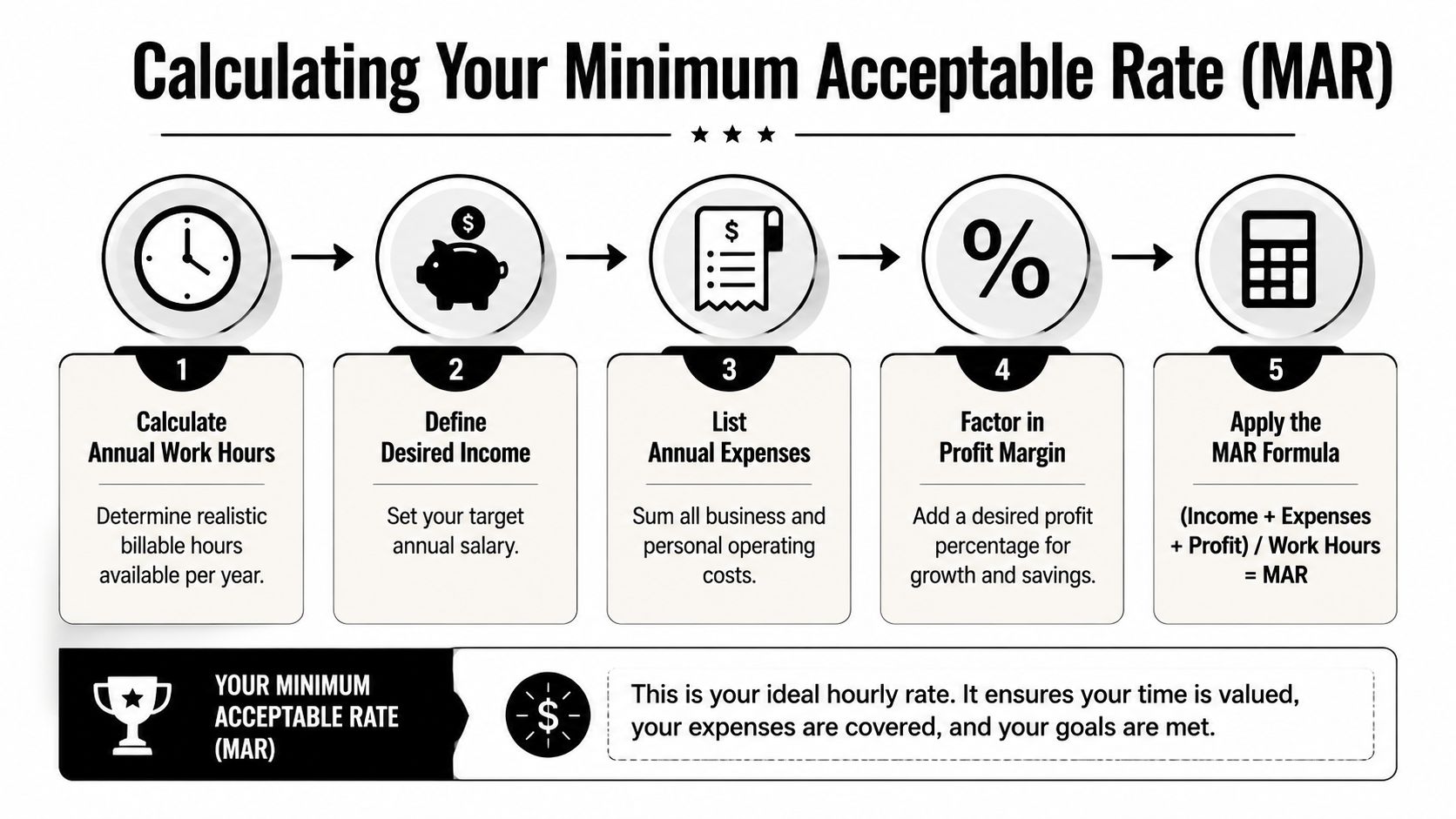
The base number to calculate first is the Minimum Acceptable Rate, or MAR. MAR is your floor. It is the hourly rate that covers the business you are running, using the amount of time you can sell.
The formula in plain English
Use this structure:
MAR = required annual revenue / realistic annual billable hours
That required annual revenue should already include the costs and profit target you set earlier. The only job here is to convert that annual target into a rate that can survive real utilization.
Here's the working version:
| Part | What it means |
|---|---|
| Required annual revenue | Owner pay, operating costs, taxes, benefits buffer, and planned profit |
| Realistic annual billable hours | Hours you can invoice after removing admin, internal coordination, sales, training, leave, and gaps between projects |
The formula is simple. The judgment is not.
A worked agency example
Take a freelance strategist working inside an agency delivery team. The annual revenue target is already set. Good. The next decision is capacity.
Start with total working time for the year. Then strip out the hours that support delivery but will never appear on an invoice. Internal standups, status updates, Slack approvals, briefing calls, handoff notes, proposal support, and the odd week where a project pauses while the client sorts itself out. Agency people often undercount these hours because each one feels minor on its own. Added together, they are expensive.
I use a simple test with project managers. If the calendar includes work the client benefits from but does not directly pay for, it does not belong in your billable-hours assumption.
For a quick sense check, compare your assumptions against monthly working hour ranges in a typical year. That benchmark should not set your rate, but it will expose capacity estimates that are clearly too high.
Then do the math:
- Set your required annual revenue.
- Estimate annual billable hours using actual utilization, not total working time.
- Divide revenue by billable hours.
- Use the result as the lowest viable hourly rate.
What this formula gets right
It forces two useful decisions.
First, it separates earning target from capacity. That matters because many underpriced freelancers are not charging too little because their income goal is unreasonable. They are charging too little because they assumed they could sell far more hours than agency work allows.
Second, it gives account leads and embedded freelancers a rate they can defend internally. If someone asks why the number looks higher than a generic freelance calculator, the answer is operational, not emotional. The rate covers delivery time plus the capacity lost to the agency layer around delivery.
Practical rule: If a proposed rate sits below MAR, the work needs a different scope, a different structure, or a different client.
Tax treatment can also affect how you model the floor. If you operate under Australian contractor rules, PSI guide for Australian tradies is worth reviewing before you lock in your assumptions.
What MAR does not do
MAR does not tell you what to quote.
It tells you when a quote stops making financial sense. Final pricing still depends on market position, specialist skill, turnaround pressure, revision load, and how much agency overhead the engagement creates. A senior freelancer embedded in a messy stakeholder environment should not charge the same rate as someone delivering a tightly defined task with minimal coordination.
That distinction matters. A usable rate model protects margin before negotiation starts.
The agency blind spot: true utilization vs billable hours
A freelancer can look fully booked inside an agency and still be underpriced.
The pattern is familiar. Forty hours are spoken for. The client sees delivery hours. The agency also needs status updates, internal reviews, estimate revisions, Slack pings, handoff notes, timesheet cleanup, and the meeting before the meeting. Those hours support the work, but they rarely show up cleanly on an invoice. That gap is the agency blind spot.
Where margin actually leaks
Freelancing Females' analysis of how to calculate your freelance rate points to the same operational problem many agency teams see firsthand: a meaningful share of the week goes to reporting, internal communication, and admin rather than direct client delivery. In practice, that can cut sellable time far more than a simple freelance calculator assumes.
That changes the rate conversation. A freelancer embedded in an agency is not only selling craft time. They are also carrying coordination load.
Billable hours and utilization measure different problems
A project manager needs both numbers, because they answer different questions.
| Measure | What it asks | Why it matters |
|---|---|---|
| Billable hours | “What can I invoice?” | Useful for proposals and revenue forecasting |
| Utilization | “How much of total working capacity turns into client work?” | Useful for spotting delivery drag and pricing pressure |
Plenty of agency teams watch billable time and miss the underlying issue. People stay busy. Margin still slips. The cause is usually hidden overhead sitting outside the scope but inside the delivery process.
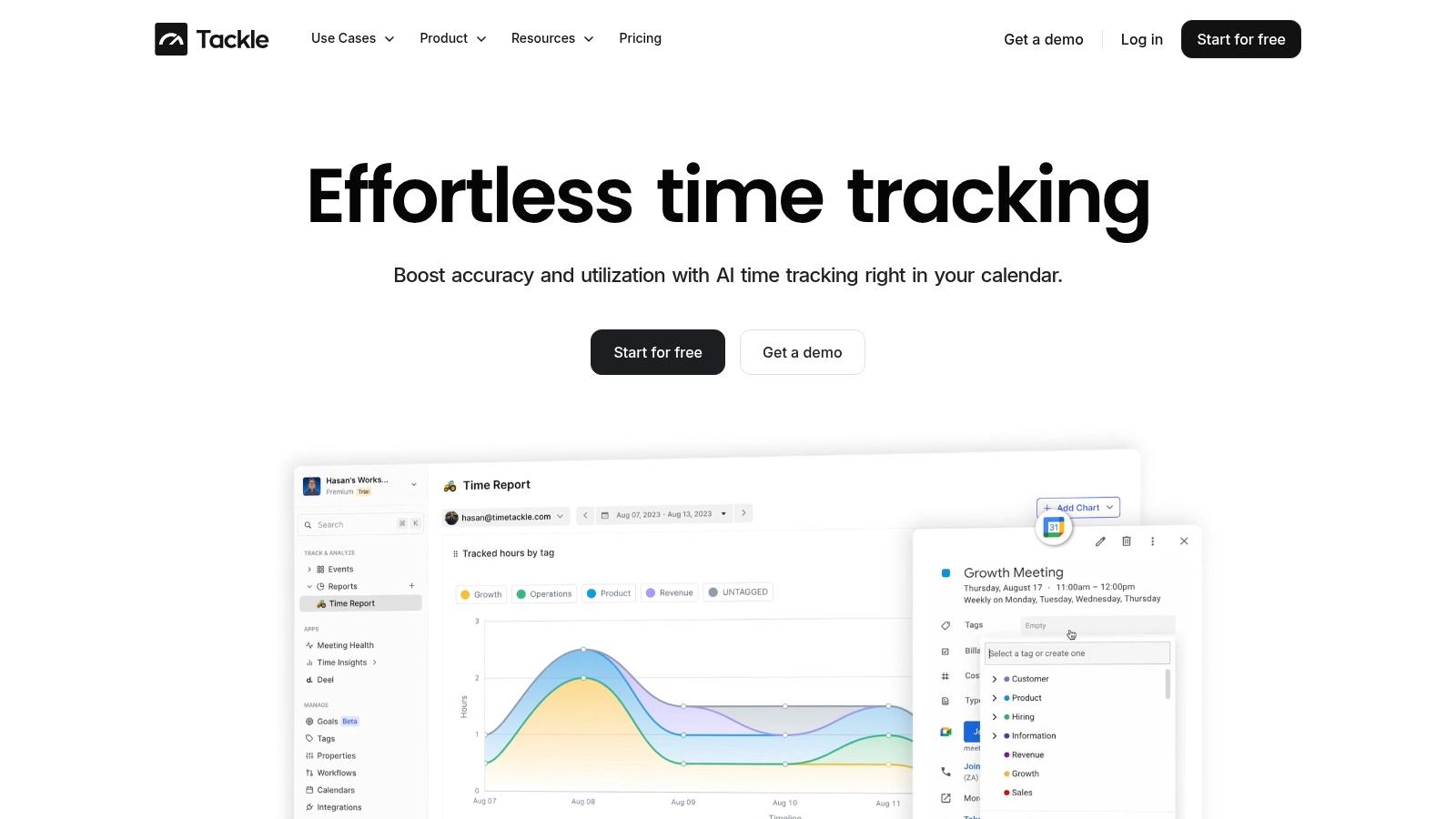
That is why clean time data matters. Internal support work needs its own tags. Otherwise, reporting, QA, approvals, rescoping, and admin all disappear into a generic non-billable bucket, and nobody can see which accounts are expensive to service. For teams that need a cleaner operational baseline, this guide on how to calculate utilization rate is useful because it ties hours back to capacity instead of activity.
How the capacity tax shows up in real agency work
You usually see it before finance sees it.
A job is quoted against production time. Then the stakeholder count grows. Approval cycles stretch. The account lead asks for more check-ins because the client is nervous. A senior freelancer spends an extra hour a day managing ambiguity that was never in the scope. The deliverables may stay the same, but the cost to deliver them rises.
That extra load gets paid somewhere. It comes out of margin, out of the freelancer's effective hourly earnings, or out of team capacity that could have supported another client.
Hidden overhead is rarely wasted effort. It is often necessary work that nobody priced.
What to do with it
Fixing this starts with measurement, not debate.
Use a time-tracking setup that separates internal comms, reporting, QA, proposal support, handoffs, and admin. Review utilization by client, by project type, and by team role. Compare accounts with similar scopes but different coordination patterns. Then make a judgment call. Some non-billable work is the cost of running a good service operation. Some of it comes from weak scoping, too many approvers, or slow internal decisions.
The rate model should reflect that difference. If a client or project shape regularly creates agency drag, the next quote needs to absorb it through a higher rate, tighter scope, fewer revision rounds, or a different pricing structure.
That is the part generic freelance advice misses. Inside an agency, capacity is never just about hours available. It is about how many of those hours survive the operating layer around delivery.
Packaging your price: project, retainer, and value-based rates
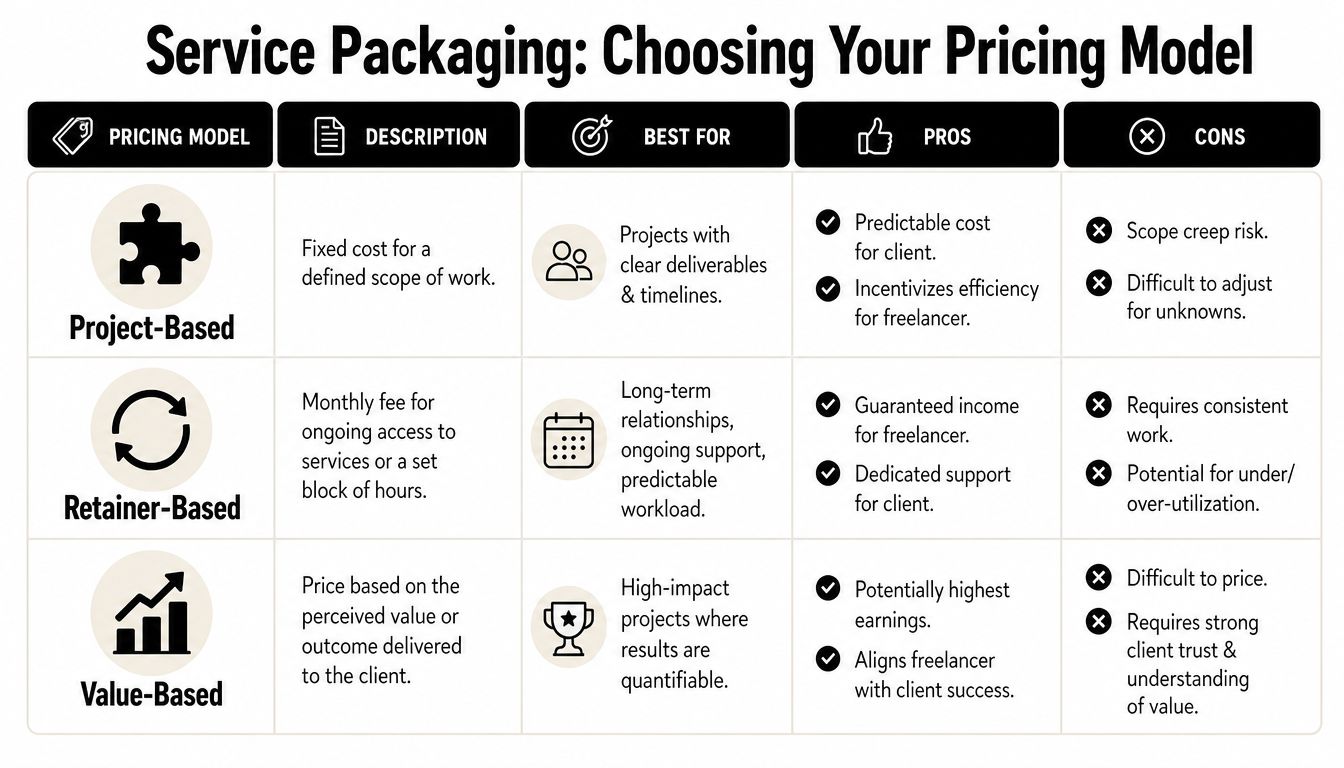
Once you know your floor, don't stop at hourly pricing. Clients often want a package they can approve, compare, and budget against. Your hourly figure is the engine under the hood. It doesn't always need to be the thing you sell.
When project pricing works best
Project pricing fits work with a clear scope, clear deliverables, and a decent handle on revision risk. Brand strategy sprints, content packages, audit work, and defined implementation phases often fit here.
The big upside is that efficiency becomes your friend. If you work faster because you know what you're doing, you keep the gain.
The danger is scope creep. In agency environments, “just one more round” can undermine a fixed fee.
A simple test helps:
- Use project pricing when the deliverables are concrete.
- Avoid it when stakeholder count is fluid or approvals are messy.
- Protect it with revision limits, change request rules, and written assumptions.
- Price the coordination load if multiple teams are involved.
Why retainers smooth out the chaos
Retainers work well when a client needs ongoing access, regular output, or continuity. They're common for marketing support, design partnerships, advisory work, and embedded specialist roles.
The best retainers define one of two things clearly: a block of time, or a set operating cadence with named deliverables. If neither is clear, the client will assume broad access and you'll end up overserving.
Retainers are often the most stable model for agency-adjacent freelancers because they absorb some of the week-to-week variation that wrecks pure hourly planning.
A retainer works when both sides understand what is reserved, what is included, and what triggers a reset.
Where value-based pricing earns its place
Value-based pricing is the strongest model when your work has obvious business impact and the client understands that impact. Think positioning work tied to a launch, a sales enablement system, or a process redesign that changes revenue quality or delivery speed.
This model is harder to use than people admit. You need trust, strong discovery, and a buyer who thinks in outcomes instead of hours. But when it fits, it breaks the old link between time spent and fee charged.
Here's a quick comparison:
| Model | Best fit | Main risk | Best use of your hourly floor |
|---|---|---|---|
| Project | Defined scope and known process | Scope creep | Convert hours into a fixed fee with buffer |
| Retainer | Ongoing support and recurring needs | Over-servicing | Set a monthly minimum around reserved capacity |
| Value-based | High-impact work with clear business upside | Weak client buy-in | Use the floor privately, not as the visible logic |
Your hourly rate matters in all three. It just becomes more useful when it informs packaging instead of controlling every invoice.
Quick methods and confident negotiation
Sometimes you need a fast estimate before a formal pricing pass. Two shortcuts are worth keeping around.
The Nation1099 pricing guide gives two simple rules of thumb: divide your desired annual salary by 1,000 to get an approximate hourly rate that accounts for non-billable time, and use the one percent rule for daily fees, where your daily rate is 1% of the equivalent annual salary. The same source gives the example that a $100,000 salary maps to a $1,000/day fee.
These aren't replacements for a full calculation. They're fast filters. If the result clashes badly with your actual floor, that tells you to slow down and run the deeper math.
Four ways to negotiate without sounding defensive
The strongest negotiation position doesn't come from confidence theater. It comes from having clean reasoning.
- Anchor with your target. Start at the rate or package you want, not the lowest number you can tolerate. If you begin from your floor, the conversation only moves downward.
- Justify with delivery logic. Explain the work shape, review burden, stakeholder load, and turnaround requirements. Clients usually accept higher prices more easily when they see what the work includes.
- Offer structured options. A lean scope, a standard scope, and a higher-touch option can work well. Different packages let clients choose trade-offs without forcing you into random discounts.
- Walk away when the math fails. If the work won't meet your minimum and the client won't reduce scope, saying no protects both your margin and your schedule.
What to say when pushed on price
You don't need a speech. You need a clear frame.
Try language like this in your own voice:
“That fee reflects the full delivery load, including coordination and review time, not just hands-on production.”
Or this:
“If you need to come down on budget, I can reduce scope. I can't reduce the fee and keep the same delivery standard.”
That's usually enough. Good clients don't need drama. They need clarity.
Your rate is a tool, not just a number
A freelance rate is not a personality test. It's not proof of confidence, and it isn't a guess you fix later. It is a business control.
When calculating freelance rates, the primary goal is to protect capacity, cover operating reality, and leave enough room to keep the business healthy. That matters even more in agency environments, where invisible coordination work can eat margin long before anyone notices.
The best freelancers and the best project managers both do the same thing here. They stop treating pricing as a one-time setup. They review it against actual time use, actual delivery drag, and actual account behavior. Then they adjust.
If your rate only reflects the work you can see, it's probably too low. If it reflects the whole system required to deliver well, it becomes a planning tool, a negotiation tool, and a filter for better clients.
If you want cleaner visibility into the hours that usually get missed, TimeTackle helps teams track calendar-based work, categorize billable and non-billable time, and see utilization without the usual timesheet grind. For agencies and freelancers who need better pricing data, that kind of visibility makes rate decisions easier to defend and easier to improve.