


Most agency leaders I talk to are not struggling with the idea of remote work. They're struggling with the mess around it.
Someone moved to another state and nobody updated payroll. A client asks about data handling on personal laptops. Managers want better visibility, but the only system in place is “please fill out your timesheet by Friday.” Then Friday comes, people guess, project margins get fuzzy, and operations has to clean it up.
That's where a real remote work agreement earns its keep. Not as a generic HR file. As a working document that sets rules people can follow, gives managers clean operating boundaries, and ties daily work to billing, compliance, and delivery.
Moving beyond a policy to a strategic agreement
A lot of agencies still run on an old “work from home policy” that was written fast and never rebuilt. It usually says people should be available during business hours, protect company information, and stay productive. That sounds fine until something goes wrong.
A remote work agreement has to do more than state preferences. It needs to define how remote work functions across client service, project delivery, security, reporting, and management. If you run a mid-sized agency, that difference matters because small ambiguities turn into recurring operational problems.
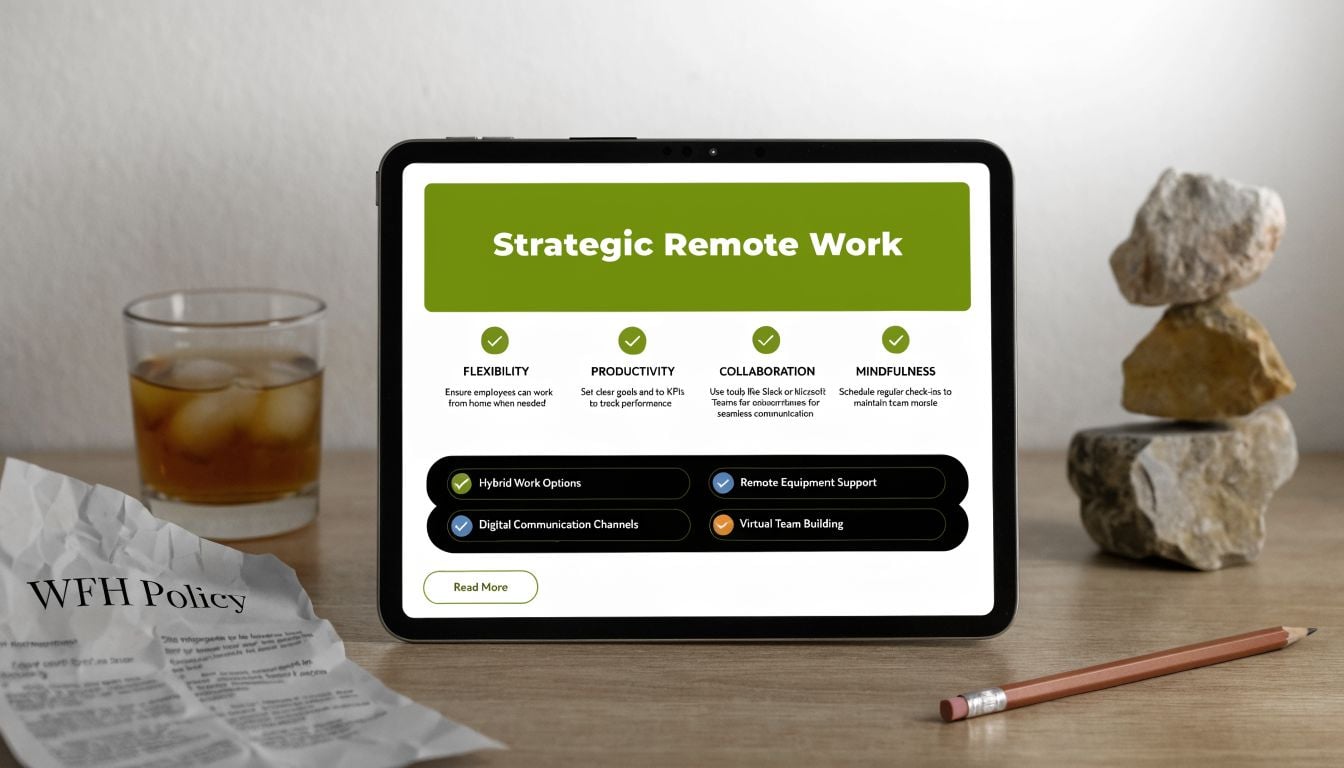
In 2025, 22% of the U.S. workforce works remotely, and 83% of global employees prefer hybrid models, while only 16% of companies are fully remote, according to remote work data compiled by Neat. That tells you two things. Remote work is no longer temporary, and most agencies still have to manage mixed environments rather than a clean all-remote model.
That hybrid middle ground is where weak documents fail. Remote workers assume flexibility means broad autonomy. Managers assume office norms still apply. Finance assumes time records will somehow stay accurate. None of that holds unless the agreement spells it out.
What a strategic agreement does differently
A useful agreement acts like an operating manual for distributed work. It should answer questions before they turn into disputes.
Here's the standard I use:
- It defines expectations clearly. People should know their work location rules, availability windows, approved tools, and how performance gets reviewed.
- It protects the business. The agreement should connect labor rules, security requirements, and client confidentiality to day-to-day behavior.
- It keeps fairness visible. Hybrid setups break down when office staff and remote staff feel they're playing by different rules.
- It supports hiring and retention. If you recruit across regions, clarity matters as much as flexibility, especially when you're trying to find the best place to hire latam remote talent or any distributed specialist who wants to know how your team really operates.
A weak policy tells people remote work is allowed. A strong agreement tells them how work gets done, measured, protected, and supported.
The agencies that handle this well stop treating remote work as an exception. They build it into staffing plans, meeting norms, reporting rules, and onboarding. That's also why remote culture can't live in one HR file. It has to connect to management practice, which is why this guide on building a healthier remote work culture is useful alongside the agreement itself.
The practical shift
If your current document is one page long, vague on work hours, and silent on tools, it's probably a policy. If it defines terms, responsibilities, workflows, exceptions, and sign-off, it's moving toward an agreement.
That shift sounds administrative, but it changes real outcomes. Managers stop improvising. Employees know where flexibility ends. Ops gets cleaner data. Finance has a defensible trail. Clients get more confidence that your agency can run distributed work without chaos.
Drafting the foundational clauses for clarity
Most remote work agreements fail in predictable places. They say people can work remotely, but they don't explain where, when, with what equipment, under which rules, and how disputes get handled. That leaves managers to interpret the gaps one by one.
The cleanest fix is to draft the basics with enough detail that a team lead, an employee, and payroll would read the same sentence and reach the same conclusion.
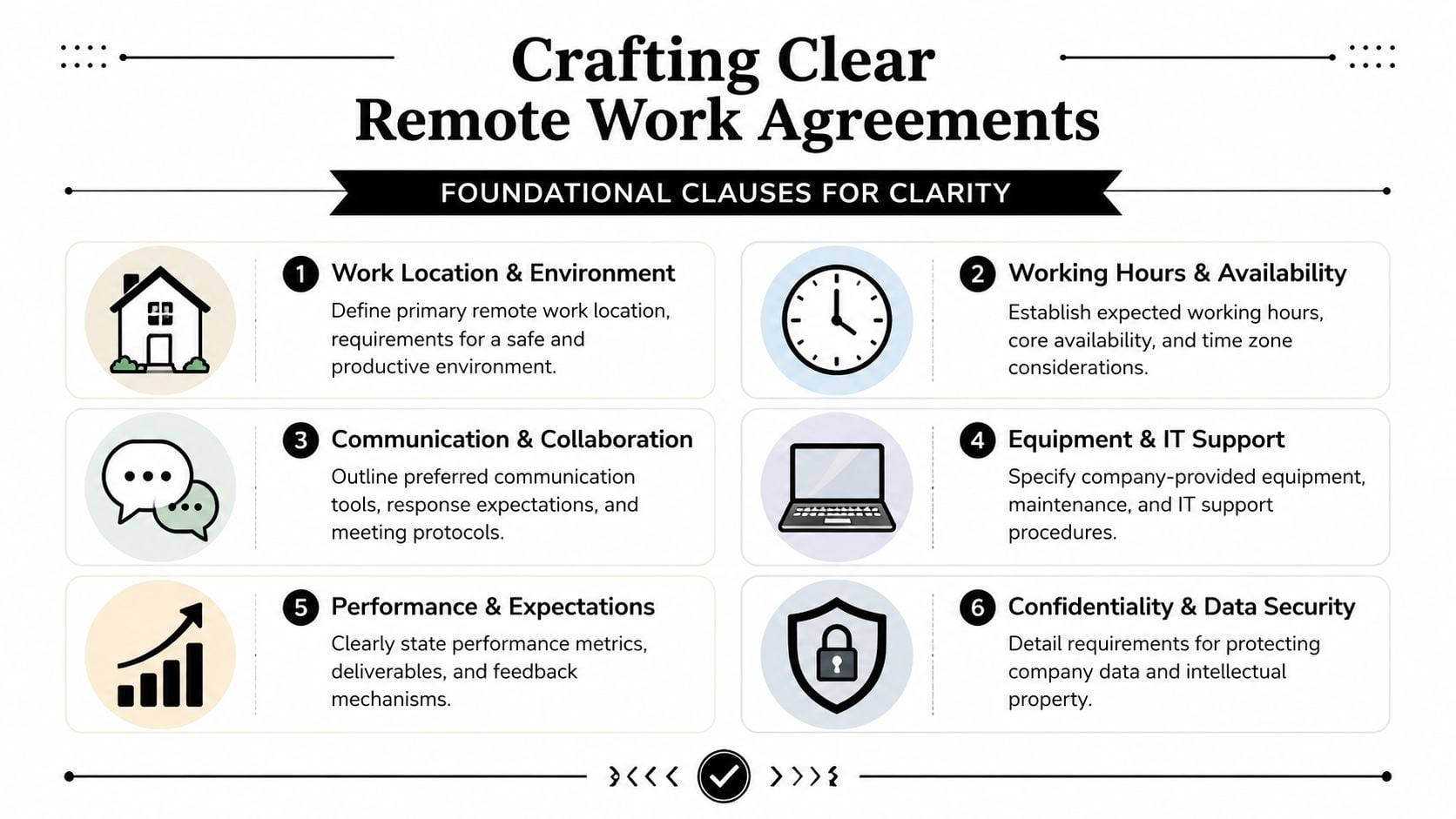
According to CodersLink's guide to remote work agreements, 40% to 50% of agreements lack documented work hours and overtime policies, which creates wage-and-hour risk. That is one of the fastest ways for a simple remote arrangement to become an expensive cleanup.
Work location and approved work environment
Start with the employee's primary work location. Don't leave this as “remote” and move on. The agreement should name the primary address, require notice before a change, and state whether work from public spaces is allowed for that role.
Sample language:
“Employee's approved primary remote work location is the address on file with the company. Any change in work state, country, or primary residence requires written approval before the change takes effect.”
That matters for taxes, labor rules, security, and client contracts. It also helps avoid the awkward situation where someone relocates and operations isn't informed until after payroll closes.
If you allow personal devices, treat that as a separate clause. Education teams have dealt with this problem for years, and this piece on Wisely school technology integration is a useful reminder that BYOD rules only work when support, security, and ownership are written down.
Working hours and availability
Agencies need more precision than most templates give them. You need to separate core collaboration hours from flexible execution time.
A strong clause usually covers:
- Core hours: When the employee must be reachable for meetings, approvals, and shared work.
- Flexible hours: When the employee can complete tasks asynchronously.
- Time recording: How hours or activity must be documented.
- Overtime rules: Who can approve extra hours and how that approval happens.
Sample language:
“Employee must remain available during team core hours as assigned by department. Outside core hours, the employee may complete work flexibly, provided deliverables, communication standards, and time-recording requirements are met.”
For agencies, this is not just an HR issue. It affects billable work, utilization, handoffs, and client response times.
Equipment and support
Remote agreements should state who provides what, who owns it, and what happens when something breaks. Vague promises like “the company may provide equipment as needed” create avoidable arguments.
Use direct language instead:
- Company property: Laptop, monitor, headset, security tools, licensed software
- Employee responsibility: Reasonable care, secure storage, prompt reporting of loss or damage
- IT process: Support channel, replacement rules, return obligations at exit
If the agency expects a dedicated work setup, say so. If the internet connection must meet a minimum operational standard, state that qualitatively if you don't have a formal technical benchmark in policy.
Expenses and reimbursement
Remote work creates friction around internet costs, office supplies, coworking, travel for office visits, and role-specific software. If your agreement is silent, employees and managers will make up different rules.
A clean reimbursement clause should cover:
- Pre-approved reimbursable expenses
- Non-reimbursable personal costs
- Submission process and deadlines
- Role-based exceptions
Often, agencies overcomplicate things. If reimbursement is limited, say it plainly. If approval must come first, put that in writing.
Governing law and internal precedence
If you have employees across multiple states or countries, your agreement should state which law governs the contract, while also acknowledging that local employment rules may still apply where required.
That doesn't replace legal review. It reduces confusion. It also tells managers that they cannot invent local practices ad hoc.
Practical rule: If a clause affects pay, time, location, or reimbursement, write it so payroll, HR, and department leads can all apply it the same way without a follow-up meeting.
The best foundational clauses are boring to read, which is a good sign. If people don't have to debate what a sentence means, the agreement is doing its job.
Protecting your agency with security and IP clauses
Client trust is fragile in a distributed setup. One person saving files to the wrong device, logging in through an unsecured network, or sharing work through an unapproved app can create exposure your agency then has to explain.
That's why security clauses should be technical, not aspirational. “Employees must protect confidential information” is not enough. People need to know exactly what systems they must use and what behavior is prohibited.

According to Los Angeles IT's remote work best practices guide, a secure remote work agreement should require VPN usage, data encryption, and two-factor authentication, and VDI is a best practice because it keeps sensitive data centralized instead of storing it on personal devices.
Write technical requirements into the agreement
The agreement should list minimum controls in plain English. For most agencies, that means the employee must use company-approved systems for access, storage, and communication.
A workable clause often includes these requirements:
- VPN use is mandatory when accessing company systems remotely.
- Two-factor authentication is required for all approved cloud tools.
- Approved password manager use is required for company credentials.
- Software and operating system updates must stay current on any approved device.
That gives IT and management something enforceable, not just a preference.
Handle BYOD separately
A lot of agencies implicitly allow personal devices because it feels convenient. The problem is that convenience becomes risk if the agreement doesn't distinguish between company-issued and personal hardware.
If you allow BYOD, add stricter terms such as:
| Area | Company device | Personal device |
|---|---|---|
| Access control | Managed by IT | Allowed only if approved |
| App usage | Standard company stack | Limited to approved applications |
| Offboarding | Device returned | Company data removed at exit |
| Storage | Company-controlled | Restricted or prohibited for local files |
You don't need legal theater here. You need rules people can follow.
Protecting intellectual property
Most agency value sits in client work, process know-how, pricing logic, templates, playbooks, reporting methods, and internal documentation. Your agreement should state that work created within the scope of employment belongs to the company, and that employees must return or delete company information when access ends.
If you want a plain-language primer before drafting formal language, these intellectual property insights from LA Law Group are a useful starting point.
“If your team can access client strategy, budget data, or proprietary process docs from a kitchen table, the agreement has to be specific enough to survive a bad day.”
Privacy and oversight
There's a real trade-off here. Agencies need visibility into work and system access, but heavy-handed monitoring damages trust fast. The right agreement states what the company monitors, why it monitors it, and where the boundary sits.
That means tracking system access, security compliance, and approved productivity records. It does not mean pretending every minute of screen time equals performance. This balance matters, and this discussion of productivity versus privacy in employee tracking is worth reading before you lock your wording.
Also include training. The source above recommends onboarding sessions and at least annual cybersecurity training. That's smart because controls fail when people don't understand them, not just when tools are missing.
Connecting your agreement to productivity and time tracking
Most remote work agreements often stop too early. They define availability, meetings, and equipment, then leave performance tracking to a separate process that usually breaks down into manual timesheets.
For agencies, that split is a mistake. If your agreement tells people what work should look like, it should also define how work gets recorded. Otherwise managers rely on memory, employees backfill hours, and client billing turns into approximation.
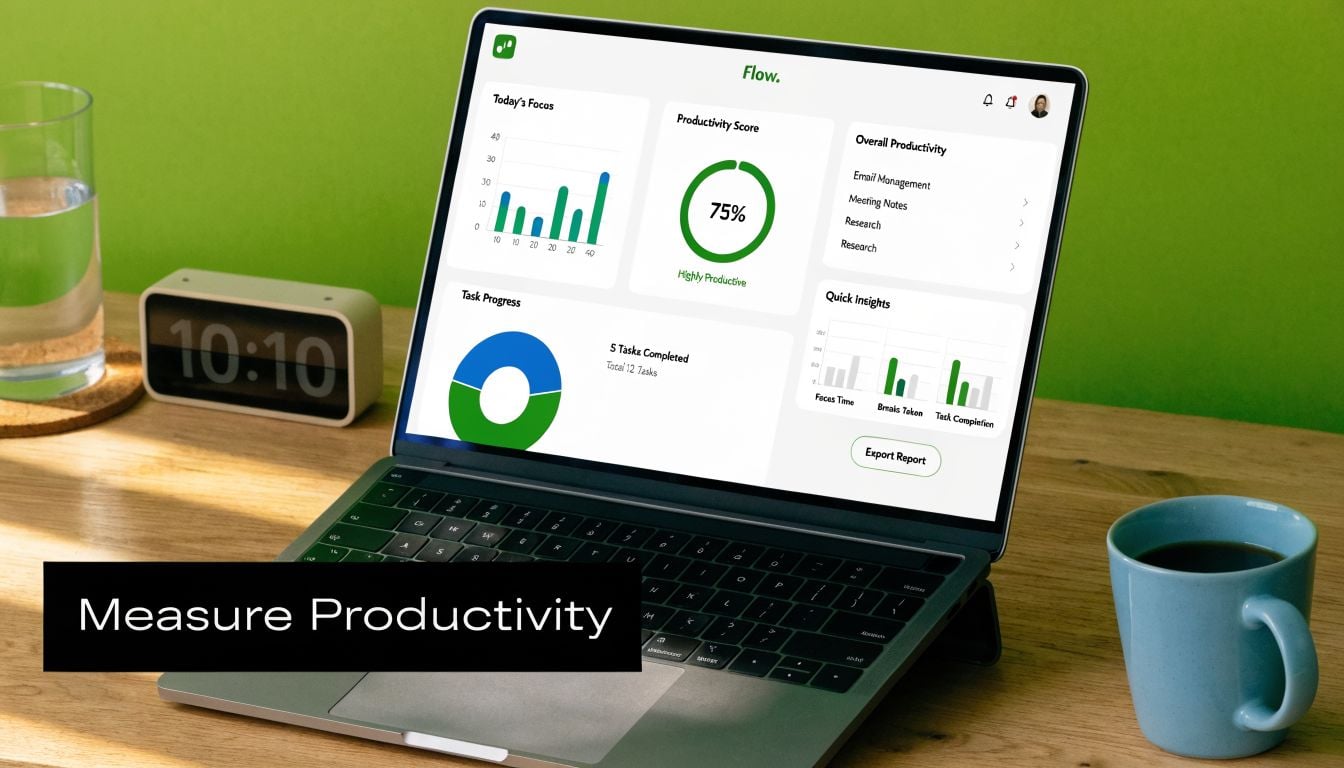
A gap in many agreements is the lack of automated time tracking. According to Seyfarth's discussion of flexibility and remote work, manual self-reporting can cause remote agency workers to lose 20% to 30% of billable time to errors, and calendar-based tools can cut that loss by over 40%.
Why manual timesheets fail in hybrid agencies
Manual reporting sounds simple until you look at how agency work happens. A strategist jumps between client calls, internal reviews, proposal edits, Slack approvals, and CRM updates. By the end of the day, asking that person to reconstruct time perfectly is unrealistic.
What usually goes wrong?
- People round from memory. Small blocks disappear, especially admin and internal support work.
- Project codes get misapplied. Hours land in the wrong client or service bucket.
- Submission becomes a weekly scramble. That delays reporting and weakens confidence in the numbers.
- Managers confuse visibility with accountability. They chase timesheets instead of managing delivery.
That isn't a discipline problem as much as a system problem.
Put the tool requirement into the agreement
If your agency depends on billable accuracy, write the tool into the remote work agreement itself. Don't leave it in a side SOP that nobody reads.
Sample language:
“Employee agrees to maintain an active connection to company-approved calendar, communication, and work-record systems for the purpose of operational reporting, workload management, and accurate client or project time capture, subject to company privacy and security policies.”
That clause does a few useful things. It sets expectation at the start. It connects reporting to operations rather than surveillance. And it gives managers a consistent standard across remote and hybrid staff.
What to define in the clause
The best wording covers both the tool and the intent behind it.
Include details such as:
- What systems connect: Google Calendar, Outlook, CRM, project tools, or approved equivalents
- What gets categorized: Client meetings, internal delivery, business development, admin time, leave
- Who reviews the data: Team leads, operations, finance, or project management
- How corrections happen: Employees can review and recategorize entries within a defined period
Working rule: Track work where it already happens, then clean and classify it. Don't make people recreate it later from memory.
That approach reduces timesheet fatigue because the record starts with actual calendar activity and system data. It also gives agencies a better base for utilization reporting, budget control, staffing decisions, and margin reviews.
There's another advantage. Automated activity capture is usually less invasive than screen-monitoring software because it focuses on work records and scheduling patterns rather than keystrokes or webcam-style oversight. If you're weighing options, this guide on time tracking for remote employees lays out the trade-offs well.
Make productivity measurable without making it punitive
The agreement should not say “we track your time because we don't trust you.” It should say the company records work activity to support billing accuracy, capacity planning, payroll compliance where needed, and fair workload distribution.
That framing matters. People accept systems more readily when the purpose is visible and reasonable.
A remote work agreement becomes much stronger when it ties flexibility to a clean operating record. That's the point where it stops being a legal form and starts helping the agency run better.
Rolling out and maintaining your agreement
Even a strong document fails if you launch it badly. If employees first see the agreement as a surprise PDF in their inbox, they'll read it as control, not clarity.
Rollout needs structure and context. Managers should understand the rules before the team sees them, because employees will test the details immediately.
A rollout process that works
Use a simple sequence and keep it consistent:
- Brief managers first. They need talking points, escalation paths, and clear answers on availability, reimbursement, security, and time recording.
- Share the agreement with context. Explain why the agency is updating it, what problems it fixes, and when it takes effect.
- Collect documented sign-off. Store acknowledgments in the employee record, not in scattered email threads.
- Build it into onboarding. New hires should see the agreement before their first week turns into a string of exceptions.
That last point matters more than many teams expect. A remote agreement is easiest to enforce when it arrives as part of the job design, not as a later correction.
Keep it current
Review the agreement on a regular cadence. Annual review is a sensible floor, and you should also revisit it after major changes in hiring geography, client security expectations, or core systems.
Use the review to ask practical questions. Are managers applying core hours consistently? Are reimbursement rules still realistic? Are the security requirements still tied to the tools people use?
The agreement should live where operations can find it, managers can apply it, and new hires can sign it. If it only exists in legal storage, it will drift out of date.
Navigating common pitfalls and complex scenarios
Real pressure shows up after the agreement is signed. Someone wants to move. A team spans too many time zones. Leadership wants more office presence without triggering resignations. A remote work agreement has to hold up under operational stress in these moments.
The document won't solve every issue on its own, but it gives you a framework for making consistent decisions.
According to High5's remote work statistics roundup, only 4% of Q1 2026 job postings were fully remote, yet 46% of workers would consider leaving if forced back full-time in office. The same source notes that smaller firms offering flexibility to 75% of staff have a retention edge. For agencies, that means the agreement is not just about control. It is part of your retention strategy.
When an employee moves
The common mistake is treating relocation as a personal choice with no operational impact. In practice, a move can affect tax handling, labor rules, expense obligations, payroll setup, security review, and team coverage.
Your agreement should require pre-approval for work location changes, but the process also needs a human workflow behind it.
A practical review checklist:
- Check payroll implications before approving the move
- Review local labor requirements that may change hour tracking or reimbursement duties
- Confirm security setup if the employee will work from a different environment or country
- Reconfirm team coverage if the time zone shifts
If you can't support the location, say so early. Mixed signals are worse than a clear no.
Cross-time-zone teams
Many "flexible" agreements become unfair through subtle shifts in expectations. A global team cannot run well if one region always takes the late calls and another region always gets the clean schedule.
The fix is not forcing everyone into one office pattern. It's defining a realistic overlap window and being disciplined about what requires synchronous work.
A simple comparison helps:
| Approach | What happens |
|---|---|
| Fixed same-hours model | Easier for managers, rough on distributed teams |
| Full async with no core overlap | Flexible, but slower for approvals and shared client work |
| Limited core overlap plus flexible execution | Usually the best fit for agency work |
For most agencies, a limited overlap window works better than trying to mirror a rigid office day across multiple zones. Put the overlap in the agreement, then tell managers to protect it for decisions, reviews, and client-facing coordination.
If your agreement says “flexible hours” but your managers expect instant replies all day, the agreement is fiction.
Return-to-office pressure
Some agencies want the option to pull people back in more often without reopening the whole employment bargain. That's understandable, but sloppy wording creates resentment fast.
Build in a clause that states remote arrangements are subject to business needs and periodic review. Then pair that with notice periods and decision criteria. Don't leave employees guessing whether “hybrid” means one day a month or four days a week next quarter.
Leadership discipline matters in this context. If you change the practice, explain why, document the new expectation, and update the agreement if the change is material. What burns trust is not change itself. It's arbitrary change.
Performance issues in remote roles
Managers sometimes treat remote work as the problem when the actual issue is weak performance management. Missed deadlines, poor communication, thin documentation, and client slippage are performance issues whether someone sits at home or at headquarters.
Your agreement should support corrective action by making expectations measurable:
- Availability standards
- Response-time expectations
- Required use of approved systems
- Documentation and reporting obligations
That gives managers a clean path to coach or escalate. Without that structure, every conversation becomes subjective.
When the agreement and reality drift apart
This happens more often than teams admit. The written rule says one thing, but managers have made exceptions for months. At that point, the problem is not the employee. It's that leadership has trained the team to ignore the document.
Do a quick audit when you review the agreement:
- Which clauses do managers enforce?
- Which ones create constant exceptions?
- Which rules no longer match your tools or staffing model?
- Where are people filling gaps with side agreements in Slack or email?
That audit usually tells you whether your remote work agreement is still operational or just ceremonial.
The best agencies keep the agreement plain, current, and tied to actual systems. They don't write for legal theater. They write for the moment when a manager needs to make a fair call, an employee needs a clear answer, and finance needs a record it can trust.
If your agency is tired of chasing timesheets, cleaning up guessed hours, and trying to measure hybrid work with office-era habits, TimeTackle is worth a look. It helps teams capture work from calendars and connected systems, organize it into useful reporting, and turn activity data into cleaner utilization, billing, and planning decisions without adding more admin work.